


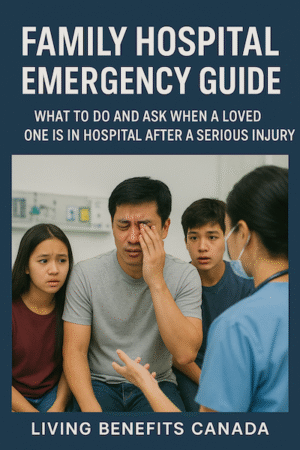

Family Medical Emergency Plan Guide

Details:

Sometimes a trip to the Emergency Department is not life-threatening or serious. It’s inconvenient, upsetting and stressful, but after a week or so you can move on and put it on the back burner.

What if it’s something more serious and is life-threatening? You need to have all the information available to give the medical team in charge. Having a ready made sheet to hand over takes all the stress off of you and gives the team what they need to treat your loved one.

Description

Processing Critical Information in a Medical Emergency

  • Stay Calm: Take a deep breath to manage anxiety and focus on the immediate situation. Your clarity helps the team.

  • Provide Key Info First: Clearly and concisely state the patient's main problem (e.g., "Severe chest pain started 20 minutes ago," "Unresponsive after a fall").

  • Use the SAMPLE Acronym (if the patient or a witness is able to speak):

    • Signs/Symptoms (What they feel/you observe)

    • Allergies (Especially drug allergies)

    • Medications (All current prescriptions and over-the-counter drugs)

    • Past Medical History (Existing conditions like diabetes, heart disease)

    • Last Meal/Oral Intake (Important if surgery is needed)

    • Events leading up to the injury/illness (What happened right before)

  • Designate a Contact: Choose one person (if possible) to communicate with the medical team, take notes, and update other family members to avoid confusion.

  • Write it Down: Keep track of the diagnosis, test results, medication changes, and instructions as they are given.

Who will speak for you if you are incapacitated? 

If, and when your worst nightmare happens, don't lose hope.

  • Have an updated list of all your family medical history in hard copy format and bring it to the hospital.
  • Show the medical team your family info to take the stress of you having to answer urgent medical questions.
  • Call a friend, colleague or neighbour... pick that "Calm in a Crisis" person who will be your second set of eyes and ears.
  • Recognize that you or your kids might be in shock. Remember to keep breathing and just focus on getting through the next ten minutes.

Reviews