
Blog
Important Legal Documents everyone should have
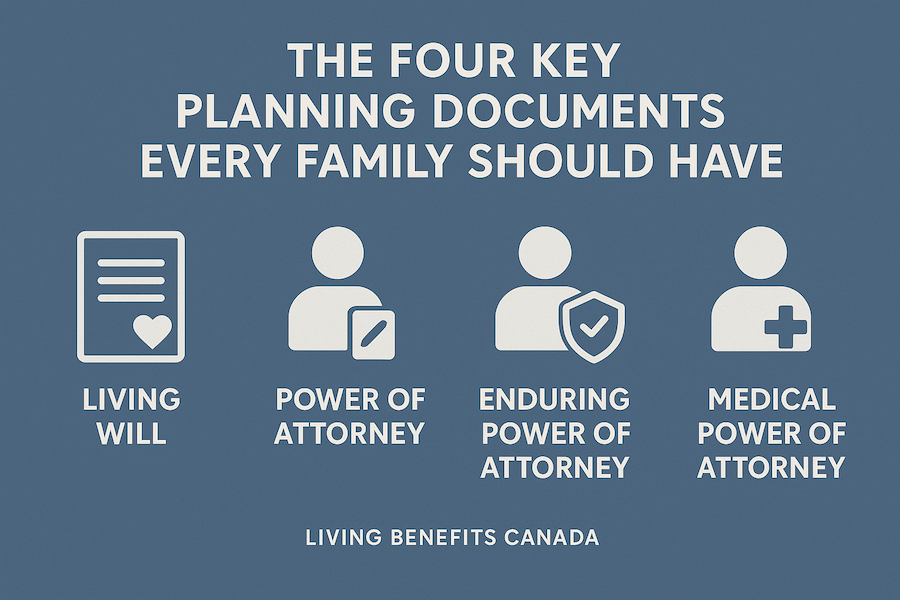
This summary does not replace having a Legal Advisor. Rather it is meant to encourage families and business partners to have open discussions on difficult but essential health, financial and legal matters.
Have a look at these 4 different items, make notes and make sure your wishes are protected with current, signed documents. Remember, Medical staff can only do what is legally binding.
Living Will (a.k.a. Advance Directive)
Purpose:
Outlines your wishes for medical treatment if you can’t speak for yourself.
Covers things like:
- Whether you want life support (ventilator, feeding tube, resuscitation, etc.)
- Pain management preferences
Organ donation wishes
Comfort care (palliative or hospice care)
When it applies:
Only if you are incapacitated (unconscious, unable to communicate, or mentally unable to decide).
Who enforces it:
Doctors follow it as a guide to your medical care. It doesn’t name someone to make decisions — it just states your wishes.
Power of Attorney (POA)
Purpose:
Gives someone (called your attorney or agent) the legal authority to act on your behalf in financial or legal matters.
For example, if you are leaving the country for a few months you may want to allow someone to manage your business or financial affairs. When you return home, the Power of Attorney would terminate.
Covers things like:
- Paying bills, managing bank accounts
- Selling property
- Signing contracts or tax forms
When it applies:
Usually only while you are mentally capable — it ends if you become incapacitated unless it’s “enduring”.
Enduring Power of Attorney (Canada)
Purpose:
Allows your chosen person to continue managing your financial or legal affairs even if you become incapacitated.
Key difference from regular POA:
A regular POA ends when you lose mental capacity.
An enduring POA continues — it “endures” through incapacity.
Covers:
- Property management
- Financial decisions
- Legal responsibilities
When it applies:
Immediately upon signing or only after a doctor certifies incapacity (depending on how it’s written).
Medical Power of Attorney
(a.k.a. Health Care Proxy or Personal Care POA in Canada)
Purpose:
This document appoints someone to make health and personal care decisions for you if you are incapacitated..
Covers:
- Medical treatment approvals or refusals
- Surgery and hospitalization decisions
- Choice of long-term care or home care
- End-of-life care and comfort measures
When it applies:
Only if you are incapacitated or unable to make medical decisions.
Who enforces it:
Your medical team will consult your named decision-maker (agent) for consent on procedures and treatments.
Summary Comparison Table
Document | Who It Involves | Focus Area | When It Takes Effect | Ends When | Key Use |
Living Will | You & doctors | Medical wishes | When you can’t communicate | After death | Tells doctors what care you want |
Power of Attorney | You & financial agent | Finances, legal matters | While capable | Upon incapacity or death | Delegates financial tasks |
Enduring Power of Attorney | You & financial agent | Finances, legal matters | Now or upon incapacity | Upon death | Continues during incapacity |
Medical Power of Attorney | You & health agent | Health & personal care | Upon incapacity | Upon death | Lets someone make health choices for you |
In Canada:
The exact names vary slightly by Province:
- Ontario: “Power of Attorney for Personal Care” (medical) and “Continuing Power of Attorney for Property” (financial).
- Alberta: “Personal Directive” (medical) and “Enduring Power of Attorney” (property).
- BC: “Representation Agreement” (medical) and “Enduring Power of Attorney” (financial).